No Return Font: A Designer's Look at This Embroidery Typeface
Understanding the Visual Character of No Return Font
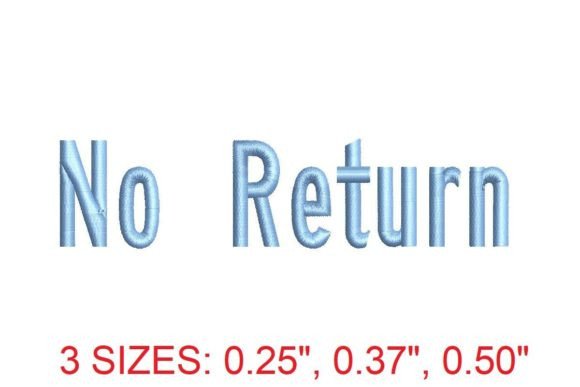
The No Return Font presents a distinct visual personality that balances classic embroidery tradition with contemporary clarity. At its core, it's a serif font with carefully crafted letterforms designed specifically for needlework. The serifs themselves are substantial, providing clear anchoring points that translate beautifully into stitches. This isn't a delicate, wispy typeface; it has presence. The stroke weight is consistent enough to ensure legibility even at smaller scales, while the overall proportions feel balanced and intentional. There's a subtle warmth to its character—perhaps from the slightly rounded terminals and the thoughtful spacing between letters—that prevents it from feeling cold or overly mechanical. It reads as both professional and approachable, a combination that's surprisingly valuable in brand identity work and editorial design where you want authority without alienation.
What makes the No Return Font particularly interesting for embroidery is its understanding of the medium. The letterforms are engineered to maintain their integrity when rendered in thread. Open counters (the enclosed spaces in letters like 'e' or 'a') are generously sized to prevent filling in at small sizes. The contrast between thick and thin strokes is moderate, ensuring that the design remains legible whether you're stitching a monogram on a cuff or a larger phrase on a tote bag. This practical consideration elevates it from being just another display font to a genuinely useful design asset for anyone working in textile arts or packaging design that incorporates embroidery.
Practical Applications: Where This Font Truly Shines
The No Return Font finds its sweet spot in projects that require a touch of refined elegance without sacrificing functionality. In logo design for boutique brands, particularly those in fashion, home goods, or artisanal food, it can establish a sense of heritage and quality. Imagine it embroidered on the pocket of a denim jacket for a clothing label, or stitched onto linen napkins for an upscale catering company. Its serif structure lends a timeless quality that helps build trust and recognition over time, which is crucial for any growing business's brand identity.
Beyond logos, its applications are remarkably versatile. Consider these practical uses:
- Monogramming and Personalization: This is its native territory. The clarity of each letter makes it ideal for personalizing everything from bathrobes and towels to leather goods and stationery.
- Apparel and Fashion Embellishment: Use it for subtle branding on garment labels, or for more prominent text on hats, bags, and jackets. Its structure holds up well on various fabrics.
- Home Décor: Stitch quotes, family names, or monograms onto pillows, wall hangings, and quilts. The font's elegance complements interior design schemes ranging from farmhouse to modern minimalist.
- Packaging and Retail Presentation: For small businesses, embroidered tags or patches created with the No Return Font can add a significant perceived value to products, enhancing the unboxing experience.
- Digital Representation: While designed for embroidery, the font's aesthetic can also be used in social media graphics or web design for brands that have an embroidered component, ensuring visual consistency across all touchpoints.
It's less suited for lengthy body copy in editorial design or for contexts requiring a ultra-modern, geometric sans serif font. Its strength lies in headlines, logos, and personalized elements where its character can be fully appreciated.
Making Informed Decisions: Pairing, Readability, and Licensing
Choosing a font like the No Return Font involves more than just liking how it looks in a preview. You need to evaluate how it will function within your specific project ecosystem. A critical first step is testing font pairing. Because it's a serif font with moderate contrast, it pairs well with clean, simple sans serif fonts for supporting text. For example, pairing it with a neutral sans serif for body copy on a website or in a brochure creates a clear visual hierarchy where the No Return Font commands attention for headlines without creating visual clutter.
Readability is paramount, especially in embroidery. Always test stitch a sample of your intended text at the final size on the actual fabric you plan to use. Factors like fabric texture, thread type, and stabilizer choice can impact the final result. The font's included sizes provide a helpful guide, but real-world testing is non-negotiable for professional work. Pay close attention to how letters like 'a', 'e', 's', and 'g' render, as these are often the first to lose definition at small scales.
From a practical standpoint, review the full character set and included styles before committing. Does it include the numerals and punctuation you need? Are there stylistic alternates that might better suit your project? The comprehensive PES file format compatibility is a major advantage, ensuring it works seamlessly with popular machines from Brother and Babylock. Finally, understand the licensing. If you're a small business owner or entrepreneur creating products for sale, you must ensure the commercial font license covers your intended use. This is a standard part of working with any premium font or design asset and protects both you and the font's creator.
Ultimately, the No Return Font is a specialized tool. It's not trying to be a handwritten font or a script font. It's a workhorse serif designed for the unique demands of embroidery. When chosen for the right project and used thoughtfully, it can significantly elevate the professionalism and aesthetic appeal of your work, helping your creations make that memorable statement you're after.